What happens if excavation uncovers unexpected rock, ledge, or a high water table?
Hidden subsurface conditions are the number-one driver of excavation cost overruns. Before issuing any quote we perform hand-auger soil borings to identify rock ledge depth, seasonally saturated horizons, and buried debris, so that subsurface surprises are priced into the contract upfront, not billed as change orders after mobilization.
Excavation in Southwest Ohio
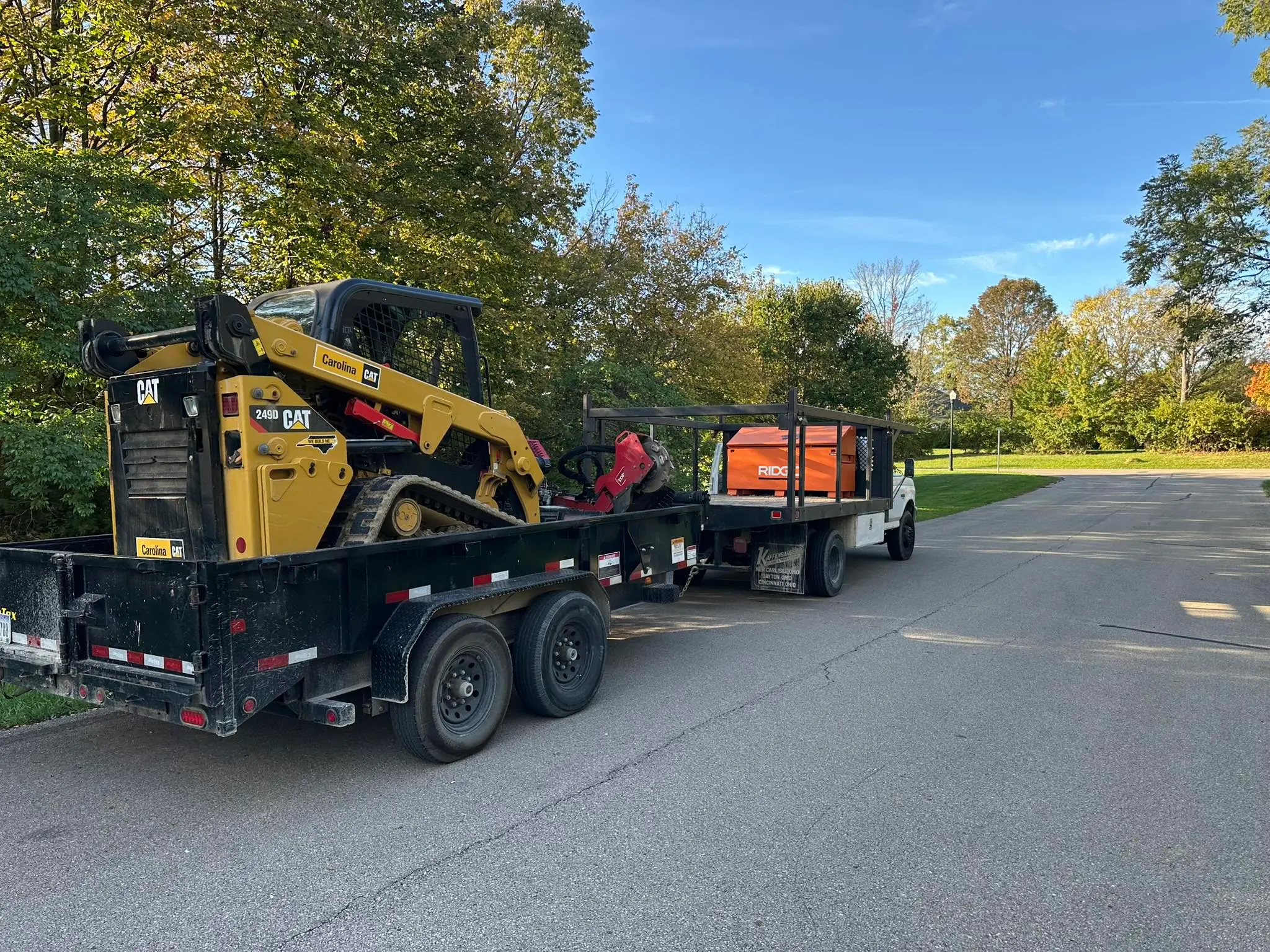
Heavy-equipment excavation and site preparation for drainage systems, retaining walls, hardscape projects, and pond excavation — performed below Ohio's 32-inch frost line with mandatory 811 utility locates, hand-auger soil borings prior to quoting, and OSHA-compliant shoring for excavations exceeding 5 feet in depth.
Every excavation project starts with understanding your site — soil type, existing drainage patterns, and how water moves across your property. Pick your city below for local permit notes, pricing signals, and real project examples near you.
Common Questions
What does pond excavation involve and can it be done on my property?
Pond excavation starts with hand-auger soil borings to confirm the clay content needed to hold water, then bulk excavation shaped to engineered side slopes with spoils either hauled off or regraded on site. Warren County SWCD earth-disturbing permits apply to most pond projects, and we handle that paperwork as part of the job.
How deep does a French drain need to be in Ohio to work below the frost line?
Southwest Ohio's frost depth is 32 to 36 inches. A drain installed above that depth will heave, crack, and lose grade every winter, eventually becoming a flat, non-functioning pipe. We install perforated pipe at a minimum depth of 36 inches and verify positive slope with a laser level before backfill begins.
Will heavy excavation equipment damage my underground utilities or tree roots?
Unmarked secondary utilities — irrigation, landscape lighting, invisible fence — are the most common excavation damage claims in residential work. We call 811 three business days before arrival and conduct a manual probe sweep of the entire work zone. Within the drip line of specimen trees we switch to vacuum excavation to prevent root damage.
Cities We Serve for Excavation
Choose a location page for the most relevant local context, pricing signals, and permitting notes.