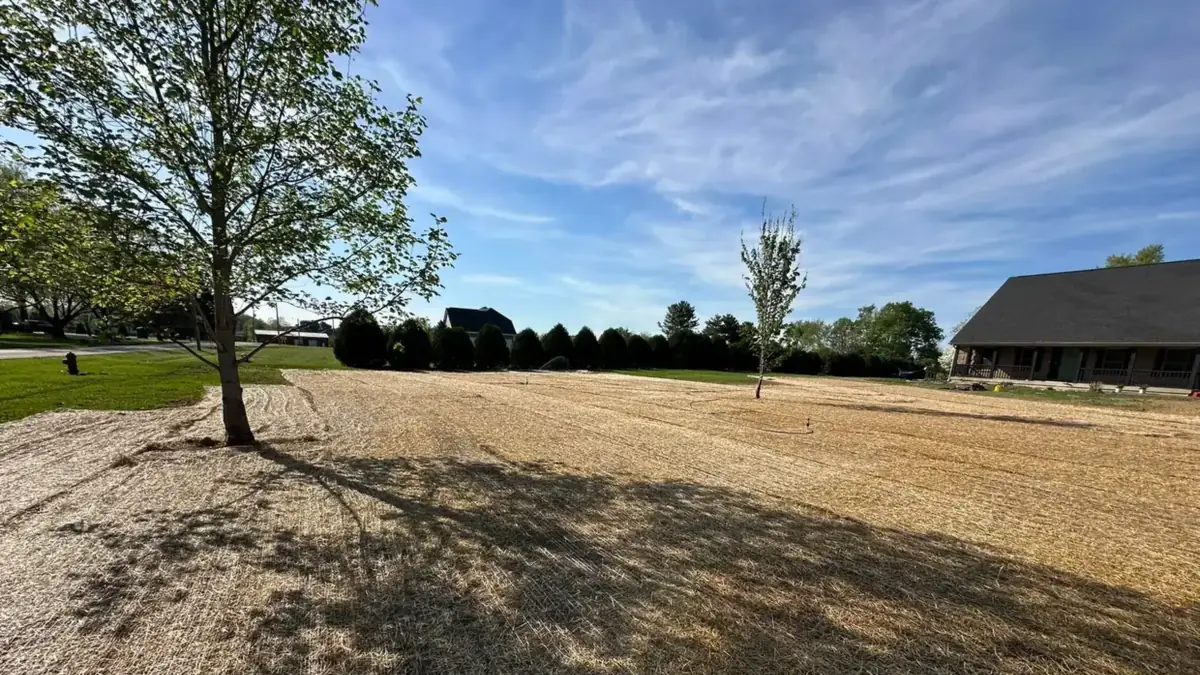
A retaining wall built the right way takes heavy equipment. Excavators, skid steers, track machines and dump trucks hauling stone and soil all have to reach the work area. On the heavy Miamian clay of Warren County, especially when the ground is damp, that equipment leaves marks. Ruts in the lawn, packed-down soil, torn turf along the access path and a yard that looks beat up for a while are the normal aftermath of real construction. Before the work starts, ask who's putting the yard back together and exactly what that restoration includes. Settling that up front, in writing, heads off the single most common argument at the end of a wall project.
Why the Damage Happens at All
Some homeowners are surprised by the mess, so it helps to know where it comes from. A structural wall means digging for footings and backfill, moving tons of clean stone into place, and hauling out tons of dug-out clay. All of it crosses your property on machines heavy enough to carry it. Our native clay compacts hard under that weight, and when it's wet it ruts deep. It's the same compaction problem that wrecks natural drainage in new subdivisions, which we cover in our post on how heavy soil behaves. A contractor who promises a wall with zero impact on your lawn either isn't building a real wall or isn't being straight with you. What you should expect is a full, professional restoration once the wall is done.
What Proper Site Restoration Includes
Restoration takes more than dragging a rake over the worst of it. Good restoration fixes the soil first and the surface second. Compacted access routes and staging areas get loosened and regraded so water drains and grass can come back. Left alone, that compacted hardpan pools water and kills turf. Ruts get filled and the grade smoothed back to its original profile, then checked so you aren't left with new low spots that hold water. Disturbed areas get good topsoil and either seed or sod, whichever was agreed. Anything that had to be moved for access goes back where it was. And the site is left clean, with extra soil, stone and debris hauled away instead of piled up for you to deal with.
Who Is Actually Responsible
On a well-run project, the contractor who did the work handles the restoration, and it's part of the original scope and price. It shouldn't show up later as an add-on. Restoration turns into a dispute when nobody defined it in the contract. A vague line like "leave the site clean" means very different things to different people. You picture your lawn looking like it did before. The contractor pictures hauling off the debris and calling it done. The contractor owns the restoration, and what that covers belongs in writing before the work begins. A contractor who's confident in their work will spell it out without being asked twice, and won't flinch when you ask for the details.
The Questions to Settle Before Work Starts
Before you sign anything, get specific answers in writing. Is the access path going to be restored, and how? Will disturbed turf be repaired with seed or sod, and over what area? Who provides the topsoil? Will the final grade be re-established to drain properly, and verified? Is hauling off debris and extra material included in the price? What's the timeline for restoration after the wall itself is finished, since seeding has seasonal windows? If restoration depends on the weather, for example seed that needs to go down in the right season, how is that handled? Settling these up front turns a likely argument into a plan you both agreed to. Bare soil also washes out fast on our clay. Rules on how quickly it has to be covered vary by city and county, so ask the Warren County SWCD or your county what applies, and ask your contractor how soon the bare ground gets stabilized.
How We Handle It
At Shawn's Landscape & Design, restoration is written into the scope from the start, because we'd rather set the expectation clearly than surprise you at the end. Access routes get planned to keep the disturbed footprint as small as we can, and existing driveways and features get protected during the work. Once the wall is done, our crew loosens and regrades the compacted areas, restores the original drainage profile, brings in clean topsoil and gets turf growing again in the disturbed zones. All extra soil, stone and debris leaves with us. The excavation and site prep and the cleanup are both ours to answer for. Your finished retaining wall should come with a yard you can actually use when we pull out.
Bottom Line: Define It Before the Machines Show Up
Heavy equipment marking up your yard is a normal part of building a real retaining wall, and cleaning it up is on the contractor who made the marks. Disputes start when restoration was never defined. Spell out exactly what restoration includes, who pays for it and when it happens, and put it in writing before the first machine rolls onto your property. We write that into every project. A wall job is finished when your yard is whole again, and that's when we leave.